
Flow Control Gate in Bulk Material Handling
Flow Control Gate Systems for Industrial Applications are central to accurate, safe, and efficient bulk material handling. Whether dosing cement, metering grain, or isolating abrasive minerals, a well-specified flow control gate stabilizes discharge, reduces surge, and prevents ratholing or bridging. Engineers rely on repeatable actuation and tight sealing to keep conveyors, mixers, and silos running consistently while minimizing dust and cross-contamination. With proper sizing, liners, and seal materials, gates can handle everything from light powders to coarse aggregates. Selecting the correct design and integrating it with plant controls creates a reliable flow path that boosts throughput and protects downstream assets.
Design options vary by application. Slide gates and knife gates excel at positive shutoff; rotary valves are better for continuous, volumetric feeding; butterfly and pinch valves can offer economical throttling for non-abrasive product. Materials of construction range from mild and stainless steel to hardened alloys and UHMW liners. Pneumatic, electric, or hydraulic actuators deliver precise positioning, while feedback devices support automated control. Trusted OEMs such as flowcontrolgate provide modular footprints, maintenance-friendly access, and gasket technologies that maintain seal integrity under temperature swings and pressure differentials found across industrial processes.
| Gate Type | Primary Strength | Typical Limitation | Best-Fit Use Case |
|---|---|---|---|
| Slide/Knife Gate | Robust isolation and tight shutoff | Not ideal for precise low-flow dosing | Silo discharge, emergency isolation |
| Rotary Valve | Continuous, volumetric feed | Clearance wear with abrasives | Metering powders to pneumatic lines |
| Butterfly Valve | Cost-effective throttling | Moderate sealing against fine dust | Non-abrasive, low-pressure throttling |
| Pinch Valve | Gentle handling of friable product | Sleeve wear over time | Granules and pellets with minimal shear |
Commissioning a flow control gate for bulk solids also means planning for maintainability and safety. Guards, lockout points, and clearances support safe interventions, while purge ports and vacuum-ready housings curb fugitive dust. Proper hopper geometry above the gate promotes mass flow and consistent discharge, reducing stress on actuators and seals. When integrated with positioners, limit switches, and load cells, the gate becomes a controllable element in a feedback loop, stabilizing feed rates to mills, blenders, or reactors. The result is smoother plant operation, fewer upstream blockages, and better protection of product quality across demanding industrial environments.
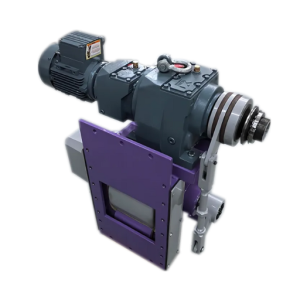 Key Components of Flow Control Gate Systems for Industrial Applications
Key components include the blade or rotor, housing and liners, sealing system, and actuator package. The blade and liners determine abrasion resistance and leakage control, while seals—such as high-durometer elastomers or graphite—manage temperature and dust. Actuators, whether pneumatic cylinders with positioners or servo-electric drives, provide controllable motion profiles to avoid shock loads and material surges. Instrumentation like proximity sensors and 4–20 mA position feedback enables closed-loop control. Together, these elements define reliability, repeatability, and sanitation performance, especially when FDA-compliant or spark-resistant materials are necessary for food, pharma, or ATEX-classified zones.
Sealing and Dust Mitigation
Effective sealing strategies combine precision machining, adjustable packing, and purge-air barriers to minimize leakage and dust carryover. For fine powders, soft seats and inflatable seals offer enhanced contact, while labyrinth geometries reduce wear at the blade-housing interface. Dust-tight construction protects bearings and actuators, prolonging service life and lowering cleanup labor. Where environmental stewardship is essential, integrating the gate with local dust extraction and negative-pressure hoods helps maintain containment. Selecting seal compounds compatible with temperature, solvent exposure, and abrasion ensures long-term performance with minimal torque increases or frequent retightening under cyclic loads.
Actuation and Control Integration
Modern actuation pairs high-repeatability positioners with digital protocols that interface to PLCs and SCADA. Pneumatic systems deliver fast response and fail-safe positioning via spring-return configurations, while electric actuators enable fine incremental control and lower air consumption. Smart feedback devices detect stiction, rising torque, or cycle counts for predictive maintenance. When combined with weigh feeders or inline sensors, Flow Control Gate Systems for Industrial Applications can follow recipe setpoints, ramp profiles, or interlocks to prevent overfeed. This orchestration stabilizes upstream silos and downstream equipment, enhancing both process capacity and equipment protection.
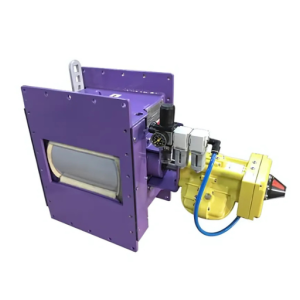
Industrial Advantages of Using Flow Control Gate
Manufacturers adopt Flow Control Gate Systems for Industrial Applications to raise throughput, reduce variability, and safeguard equipment. Consistent dosing protects mixers from overload, ensures uniform particle distribution, and reduces scrap or rework. Accurate isolation shortens changeovers and prevents cross-contact between incompatible batches. Plants also benefit from quieter operation and lower housekeeping when seals and extraction are built-in. Because gate designs can be tailored to particle size, abrasiveness, and temperature, the same platform adapts across sectors—from cement and mining to food, plastics, and specialty chemicals—with minimal re-engineering and faster deployment timelines.
Total cost of ownership improves through durable liners, accessible packing glands, and modular actuators that simplify replacements. Many operators standardize on a small set of gate sizes to streamline spares and training. With smart position feedback, maintenance teams schedule interventions based on actual cycle data instead of fixed intervals, cutting unplanned downtime. In sanitary lines, polished contact surfaces and tool-less access enable faster dry cleaning between allergen runs. In abrasive services, hardened blades and replaceable wear plates extend life without sacrificing sealing, keeping Flow Control Gate Systems for Industrial Applications operating efficiently over long service intervals.
Beyond mechanics, integration with plant automation unlocks measurable performance gains. Gates tied into mass flow meters or load cells can auto-correct feeding errors in real time, preventing density swings or off-spec blends. Remote monitoring allows supervisors to spot trends and intervene before blockages occur. Safety improves through interlocked guards, torque limits, and position-verified isolation during maintenance. Environmental performance also benefits as dust capture and tight seals reduce emissions and product loss. Together, these advantages build a resilient production environment that scales with demand and supports continuous improvement and digitalization goals across industries.
How Flow Control Gate Systems for Industrial Applications Improve ROI
Return on investment comes from stabilizing processes, extending equipment life, and lowering energy and labor inputs. Smoother feeding reduces motor spikes and belt slippage on conveyors, while precise isolation curbs waste during product changeovers. Predictive maintenance informed by actuator and positioner diagnostics prevents catastrophic failures and aligns parts ordering with actual wear. Standardized platforms cut training time and streamline spare inventories. When quality improves and rework drops, capacity effectively rises without adding new lines, allowing operators to meet demand using existing assets while maintaining compliance and audit readiness in regulated environments.
Throughput and Yield Optimization
Properly tuned gates reduce surges and starvation, helping mills, dryers, and blenders operate in their ideal load windows. Consistent feed density yields tighter residence times and reaction conditions, unlocking higher average throughput with fewer stoppages. Because the gate becomes a controllable restriction, engineers can shape discharge curves to match downstream process kinetics. The knock-on effects include steadier energy draw, lower mechanical shock, and improved product uniformity. Over time, these gains manifest as more saleable tons per hour and better on-time delivery, both critical KPIs in competitive industrial markets with tight margins and strict customer specs.
Sustainability and Compliance Benefits
Enhanced sealing and dust control reduce product loss and cleanup effort, lowering waste and the environmental footprint of bulk handling operations. By minimizing fugitive emissions and facilitating contained maintenance, gates support occupational hygiene targets and regulatory compliance. Energy savings arise from stabilized loads, fewer restarts, and reduced compressed air usage when electric actuation fits the duty. Documentation-ready materials and traceable components align with food and pharma expectations, while antistatic and spark-resistant designs support hazardous location requirements. Collectively, these elements help organizations meet ESG commitments without sacrificing productivity or product quality.
Frequently Asked Questions
Slide and knife gates are ideal for isolating and discharging coarse to moderately abrasive bulk solids, such as aggregates, clinker, and pellets. They offer strong shutoff capability and can be fitted with abrasion-resistant liners and adjustable packing to manage dust and wear in harsh services.
Gates use pneumatic or electric actuators with positioners and feedback signals that tie into PLCs and SCADA. With limit switches, analog position outputs, and alarms, they can follow setpoints, coordinate with feeders, and trigger interlocks for safe, repeatable operation across batches and shifts.
Choose a rotary valve when you need continuous, volumetric feeding rather than simple isolation or on/off control. Rotary valves meter fine powders into pneumatic conveying lines, while gates excel at throttling, emergency isolation, or batch discharge from hoppers and silos.
Routine checks of seal compression, liner wear, and actuator alignment prevent leakage and rising torque. Recording cycle counts, inspecting feedback devices, and replacing wear parts during planned outages help avoid unplanned downtime and keep performance stable over long service intervals.
Yes. Sanitary versions use stainless steel, polished contact surfaces, and hygienic seals suitable for food or pharma. For hazardous zones, antistatic materials, grounding, and compatible actuators are paired with dust-tight housings to meet relevant classifications when properly specified and installed.
Start with particle size, bulk density, and required throughput, then select a gate with adequate opening area and abrasion-resistant liners. Consider conservative velocities, reinforced blades, and maintenance access to manage wear while maintaining reliable sealing and controllable discharge.