
Innovations in Flow Control Gate Technology
Over the past decade, these gates have evolved from simple mechanical devices into smart, ruggedized assets that control throughput with precision while reducing energy use and maintenance. Advances in materials, sealing, and digital monitoring now enable reliable operation in harsh, abrasive, or hygienic environments. Whether you deploy OEM solutions or integrated systems from partners like flow control gate, the latest designs are engineered to handle higher pressures, tighter leakage classes, and faster actuation without sacrificing lifecycle cost or safety compliance.
Material science is driving major gains. Wear liners using ceramics, tungsten carbide, or UHMWPE protect bodies and blades in abrasive slurries, while PEEK and PTFE-based seats provide low-friction sealing for corrosive services. Live-loaded packing sustains seal stress despite thermal cycling, and inflatable seals deliver bubble-tight isolation. Meanwhile, high-efficiency electric actuators replace air where feasible, avoiding compressor losses and delivering smoother torque control—often cutting energy consumption versus pneumatics by 25–40% in continuous duty (Source, 2025). These innovations together reduce stiction, lengthen service intervals, and preserve accurate control across varying temperatures, viscosities, and solids loads.
Digitalization completes the picture. Position encoders, blade force sensors, pressure transducers, and vibration monitoring feed edge analytics or centralized IIoT platforms. With machine learning models trained on cycle counts, stroke time, and seal wear indicators, teams can schedule maintenance just-in-time, avoiding unnecessary teardowns. Plants using predictive diagnostics report 30–50% fewer unplanned stoppages and faster root-cause resolution compared with time-based maintenance (Source, 2025). Integrating gates with DCS/SCADA allows closed-loop setpoint trims, alarming on drift, and auto-failover to safe states, raising both process stability and operator confidence.
| Gate Type | Typical Media | Key Innovation | Leakage Performance | Energy Profile | Maintenance Cadence |
|---|---|---|---|---|---|
| Knife Gate | Abrasive slurries, tailings | Ceramic liners, perimeter seats, blade guides | Bi-directional, drip-tight options | Pneumatic (high), Electric (medium) | 3–6 months inspection |
| Slide Gate | Dry powders, pellets | Live-loaded seals, dust-tight enclosures | Dust-tight, minimal fugitive emissions | Pneumatic/Electric (medium) | 6–9 months seal check |
| Rotary Gate/Valve | Metering, airlock service | Wear-resistant coatings, precision clearances | Low slip across rotor | Electric VFD (medium-low) | 6–12 months bearing check |
| Pinch Gate | Food, corrosives, abrasives | Elastomer sleeves, quick-swap design | Bubble-tight when pressurized | Pneumatic/Electric (low) | 12–18 months sleeve swap |
Compliance and hygienic design are also advancing. Gas service applications benefit from SIL-rated actuators and partial-stroke testing to verify emergency shutdown functionality. Dust-handling designs support NFPA and ATEX zoning with antistatic seals and grounded bodies to mitigate ignition risks. In food and pharma, crevice-free geometries, CIP/SIP compatibility, and FDA/EC-compliant elastomers minimize harborage and changeover time. Plants upgrading to modern sanitary gates report 10–15% faster product changeovers and measurable reductions in cross-contamination incidents year over year (Source, 2025). Collectively, these innovations unlock higher uptime and better quality across demanding production schedules.
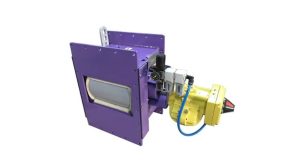
Where these innovations deliver the most value
Harsh slurries and abrasives
Mining concentrators, mineral sands, and fly-ash lines punish conventional hardware. Ceramic-lined knife gates and guided blades retain sealing faces, while hardfaced seats resist micro-chipping from entrained grit. Predictive analytics that track blade force and actuator current help flag packing wear or blade deflection before loss of isolation. The result is stable throttling through density swings, smaller maintenance windows, and fewer catastrophic seal failures under cyclic pressures—key benefits when every unscheduled hour carries high production penalties.
Dusty bulk solids and powders
Cement, grain, and plastics rely on slide gates that meter flow into conveyors and silos without releasing dust. Live-loaded seals preserve compression despite thermal changes, and low-friction coatings prevent ratholing and bridging at the orifice. ATEX-ready designs with conductive elastomers and static bonding improve safety in explosive atmospheres. Adding position feedback and stroke-time alarms maintains accurate dosing, while enclosure purges keep fine particulates away from bearings and stems, extending life and ensuring consistent volumetric feed rates.

Troubleshooting Common Issues with Flow Control Gates
Across Industrial Applications of Flow Control Gates, recurring symptoms appear: leakage past seats, sluggish actuation, stiction at mid-stroke, false position feedback, and dust or slurry ingress into packing. Effective troubleshooting begins with context. Log process conditions, media properties, and recent maintenance actions. Verify that the application still matches the original duty—changes in solids content, viscosity, or line pressure often explain new behavior. Safety comes first: depressurize, isolate energy, and follow lockout/tagout before any mechanical inspection.
Adopt a data-first diagnostic path. Review trend charts for actuator pressure, motor current, and stroke time; step tests can reveal friction spikes. Validate instrument air quality, dew point, and filtration, since wet or oily air degrades pneumatics quickly. For electric drives, confirm power quality and grounding. Compare PLC/DCS commands with local indicators to detect calibration drift or offset scaling. Plants that leverage digital logs and condition monitoring report up to 40% faster mean-time-to-diagnose and fewer repeat interventions after corrective actions (Source, 2025).
Target common root causes. Persistent leakage typically points to worn seats, blade scoring, or misalignment from piping loads; check flange parallelism and retorque in a star pattern, then inspect sealing faces and replace consumables. Slow or incomplete strokes suggest contamination in guides, inadequate actuator torque, or sticky packing—clean, re-lubricate where appropriate, and verify actuator sizing versus differential pressure. Erratic feedback often stems from loose couplings, damaged encoders, or I/P converter drift; recalibrate and secure all connections after mechanical corrections.
Close with prevention. Establish a condition-based plan tracking cycle counts, maximum differential pressure, stroke time, and seat leakage rate as KPIs. Flush ports or purge air in abrasive or dusty service, and schedule periodic gland adjustments using torque values from the OEM. Keep seal kits, sleeves, and positioners in inventory to shorten downtime during turnarounds. Sites that institutionalize these routines routinely cut emergency callouts by 30% and extend gate overhaul intervals without sacrificing product quality or safety margins (Source, 2025).
Step-by-step quick checks
Actuator and control loop
Confirm supply: instrument air pressure at setpoint with low dew point, or stable voltage and clean grounding for electrics. Bypass the controller and jog the actuator locally to isolate control-loop issues. Compare commanded versus actual position to quantify deadband; tune PID and friction compensation as needed. Inspect I/P transducers and positioners for calibration drift, and verify fail-safe direction and stroking time against process safety requirements before returning to normal operation.
Mechanical and sealing components
Inspect the blade/slide for wear tracks and burrs that cause stiction; dress or replace damaged parts. Check guide rails, liners, and seats for embedded debris; clean and consider harder materials or coatings if wear is rapid. Examine packing for glazing or extrusion—reset or replace and ensure even gland torque. Validate flange alignment and support to prevent body distortion. In slurry service, open flush ports during actuation to clear the sealing path and reduce abrasive scoring.
Frequently Asked Questions
Which industries gain the most from modern flow control gate upgrades?
Mining and mineral processing see major gains thanks to abrasion-resistant liners and guided blades. Dry bulk sectors like cement and grain benefit from dust-tight seals and position feedback, while food and pharma use hygienic designs for faster changeovers and reduced contamination risks.
How do smart sensors improve gate reliability and maintenance?
Position, pressure, vibration, and motor current data reveal friction spikes, seal wear, and misalignment before failure. With predictive analytics, teams schedule targeted maintenance and avoid unnecessary teardowns, cutting unplanned downtime and speeding root-cause analysis.
When should I choose electric over pneumatic actuation?
Electric actuators excel where precise positioning, low energy use, and limited air availability matter. Pneumatics still shine for rapid failsafe action and simple on/off service; hybrid strategies use pneumatics for ESD and electrics for throttling where energy savings are significant.
What are the telltale signs that sealing materials need an upgrade?
Frequent retightening, rising leakage rates, and temperature-related drift indicate seal stress. If media chemistry or solids loading changed, upgrading to PEEK/PTFE blends, ceramic seats, or inflatable seals can restore bubble-tight performance and extend intervals between overhauls.
How often should flow control gates be inspected?
Base intervals on duty severity: abrasive slurries may warrant 3–6 month inspections, while clean, dry service can extend to 9–12 months. Use cycle counts and stroke-time trends to trigger earlier checks when wear accelerates or torque demand rises unexpectedly.
Follow Us Stay ahead of emerging flow control innovations, maintenance tips, and industry benchmarks. Follow us for practical insights that boost reliability, safety, and throughput in your operations.