
What is a Flow Control Gate?
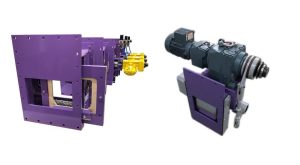
A flow control gate is a mechanical device installed in conveyor systems, silos, bins, or hoppers. Its main function is to adjust the discharge rate of materials by opening or closing the gate to a desired level.
By controlling the flow, operators can optimize efficiency, minimize material loss, and protect downstream equipment from overload.
These gates are typically fabricated using robust steel or cast iron, capable of withstanding abrasive and heavy materials. Depending on the industry’s needs, they can be operated manually, electrically, pneumatically, or hydraulically.

Types of Flow Control Gates
- Manual Flow Control Gate: Operated by hand wheels or levers, ideal for smaller applications.
- Motorized Flow Control Gate: Electric motor-driven gates for continuous and automated operations.
- Pneumatic Flow Control Gate: Powered by compressed air, offering fast and efficient control.
- Hydraulic Flow Control Gate: Used in heavy-duty industries where strong force and durability are required.
Applications of Flow Control Gates
- Cement Industry: Regulating clinker and cement flow to kilns and mills.
- Mining and Quarrying: Handling coal, limestone, and ores.
- Agriculture: Managing grain and feed distribution.
- Power Plants: Controlling the flow of coal or biomass fuels.
- Food Processing: Managing flour, sugar, or other granular raw materials.
Advantages of Using Flow Control Gates
- Efficient Flow Regulation – Precise control reduces material waste.
- Versatility – Can handle a wide range of bulk materials.
- Durability – Made from heavy-duty materials for long-term use.
- Automation Compatibility – Easily integrated into modern industrial systems.
- Reduced Maintenance – Simple design requires minimal upkeep.
Comparison Table of Flow Control Gate Types
| Gate Type | Operation Mode | Best For | Advantages |
|---|---|---|---|
| Manual Gate | Hand wheel/lever | Small-scale applications | Low cost, simple design |
| Motorized Gate | Electric motor | Continuous/automated processes | Reliable, easy integration |
| Pneumatic Gate | Compressed air | Medium to large industries | Fast operation, efficient control |
| Hydraulic Gate | Hydraulic system | Heavy-duty industries (mining, cement) | High force, very durable |
Frequently Asked Questions (FAQ)
- What is the main purpose of a flow control gate?The primary function of a flow control gate is to regulate the discharge and flow of bulk materials, ensuring smooth operations and preventing overload in industrial systems.
- Can flow control gates be automated?Yes, many flow control gates can be integrated with automated systems using electric, pneumatic, or hydraulic actuators. This allows operators to control them remotely or program them for specific flow rates.
- What materials are used to manufacture flow control gates?Flow control gates are generally made of high-strength steel, cast iron, or abrasion-resistant alloys to withstand the pressure and wear of bulk materials.
- In which industries are flow control gates most commonly used?They are widely used in cement plants, mining operations, power plants, agriculture, and food processing industries.
- What are the maintenance requirements for flow control gates?Due to their robust design, maintenance is relatively low. Regular inspection, lubrication, and cleaning of moving parts are typically sufficient to ensure long service life.