
Understanding Flow Control Gates: Types and Applications
Understanding Flow Control has evolved from manual levers to intelligent, automated systems that learn and adapt to changing hydraulic conditions. Modern flow control gates combine high-resolution sensors, variable-speed actuators, and AI-enhanced logic to regulate discharge precisely during floods, irrigation cycles, and hydropower operations. Digital twins mirror physical gates in real time, enabling operators to test scenarios safely before deploying changes to the field. Cloud-connected SCADA and IIoT platforms streamline alerts and maintenance scheduling, reducing downtime and improving safety margins. Together, these innovations elevate reliability while helping agencies meet stricter environmental, safety, and resilience requirements across diverse watersheds.
Hardware advances are equally significant. Brushless servomotors allow finer positioning, while corrosion-resistant composites and advanced coatings extend service life in abrasive or saline environments. Sealing systems have improved leakage performance and debris tolerance, reducing losses and downstream turbulence. On the software side, predictive algorithms ingest rainfall forecasts, upstream levels, and power prices to optimize gate setpoints against multi-objective targets such as flood defense, energy generation, and ecological flows. Early adopters report fewer emergency drawdowns and smoother ramping because the controls anticipate inflow spikes hours ahead of time (Source, 2025).
| Gate Type | Response Speed | Automation Readiness | Leakage Control | Capex | Best-Fit Use |
|---|---|---|---|---|---|
| Radial (Tainter) | Fast | High | Good | Medium-High | Large spillways, flood control |
| Slide (Sluice) | Moderate | Medium | Very Good | Medium | Canals, intake structures |
| Segment | Fast | High | Good | High | Hydropower, navigation locks |
| Inflatable Rubber Dam | Moderate | Medium | Fair | Low-Medium | Urban rivers, weir retrofits |
| Fusegate | Passive | Low | Good | Medium | Emergency flood storage |
Cybersecurity-by-design is now standard, hardening gate controllers against intrusion with network segmentation and zero-trust protocols. Edge analytics reduce cloud dependence, sustaining local decision-making during connectivity outages. Sustainability is also central: low-friction bearings, smart standby modes, and solar-backed actuation can cut operating energy, while lifecycle assessments guide material choices for lower embodied carbon. With vendors like flowcontrolgate emphasizing modular retrofits, utilities can modernize legacy gates in phases, avoiding lengthy outages. Case studies show adaptive control can reduce spill losses by 10–20% during storm events while maintaining safe headwater limits (Source, 2025).
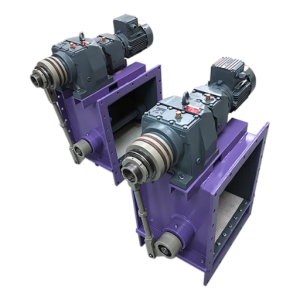 Understanding Flow Control in Smart Gate Operations
At its core, Understanding Flow Control means aligning gate movements with dynamic objectives—preventing overtopping, protecting habitats, smoothing hydropower ramping, and preserving navigation depths—without overcorrecting. Smart controllers forecast inflows and translate risk thresholds into smooth actuator commands, minimizing oscillations and wear. They weigh multiple constraints, such as tailwater impacts and turbine efficiency windows, so small, frequent adjustments replace large, disruptive ones. Reliability improves because the system anticipates rather than reacts. Operators retain authority, but the system proposes setpoints and explains its confidence, building trust and traceability for audits and compliance reviews (Source, 2025).
Edge Sensing and Predictive Maintenance
- Multi-parameter sensors track vibration, torque, and seal pressure, flagging anomalies before failure.
- Condition-based work orders replace calendar-based service, cutting unnecessary shutdowns and spare-part waste.
- Local analytics keep core functions running even if the network or cloud link drops.
Low-Carbon Materials and Retrofit Pathways
- Composite leaf panels and thermal-spray coatings extend life in corrosive or sediment-laden sites.
- Modular actuators and controls enable staged upgrades, shortening outages and permitting cycles.
- Lifecycle metrics guide choices that reduce embodied carbon while sustaining structural margins (Source, 2025).
Flow Control Gates in Hydro Engineering Projects
From feasibility to commissioning, modern project delivery integrates gates as active assets, not static structures. In early studies, hydrologists test scenarios for probable maximum flood, drought resilience, sediment behavior, and environmental flows. Designers then size bays, select gate types, and position sensors to avoid cavitation and debris traps. Construction planning addresses cofferdams, traffic management, and water diversion stages, while procurement secures long-lead actuators and panels. Embedding Understanding Flow Control principles at this phase helps align civil, mechanical, and electrical disciplines so the final system achieves performance targets with fewer change orders.
During detailed design, multidisciplinary models link hydraulics with control logic: how a gate will move, at what ramp rate, and with which interlocks for turbine coordination or fish passage windows. Simulations quantify uplift, vibration, and downstream scour, validating safe envelopes for extreme events. Digital twins tie to BIM, enabling clash detection and progressive commissioning tests in virtual space. Many owners now include performance KPIs—like leakage per meter of seal or ramp-rate deviation—directly in contracts, creating measurable accountability and smoother handover to operations (Source, 2025).
Operationally, well-instrumented gates support flood routing, irrigation scheduling, and peak-power pricing strategies. Operators review dashboards that blend radar rainfall, snowmelt forecasts, and reservoir rules, then approve recommended setpoints. Understanding Flow Control supports transparent decision logs, aiding regulators and community stakeholders. Over time, machine learning tunes controllers to local idiosyncrasies—wind setup, gate friction, and sediment pulses—improving precision without sacrificing safety. Planned outages coordinate with seasonal minima and environmental windows, while predictive maintenance curbs emergency callouts and lowers lifecycle cost by reducing unplanned wear (Source, 2025).
Project Delivery with Understanding Flow Control Principles
A practical delivery roadmap starts with requirements capture, translating flood risk, energy goals, and ecological constraints into control rules. Next, teams prototype logic in the digital twin, test storm ensembles, and define alarms, fallbacks, and cybersecurity zones. Factory acceptance runs include “what-if” drills—sensor loss, actuator stalls, and communication delays—before site acceptance verifies real hydraulics. Finally, performance-based O&M embeds KPIs, from leakage and vibration to ramp-rate fidelity, with quarterly reviews and continuous updates. This approach aligns stakeholders, reduces claims, and accelerates reliable operations by turning design intent into measurable, traceable outcomes (Source, 2025).
Risk Management Checkpoints
- Stage-gated reviews at feasibility, 30/60/90% design, FAT, and SAT ensure traceable decisions.
- Failure modes and effects analysis prioritizes redundancies for power, sensors, and actuators.
- Clear fallback modes (manual, local auto) preserve safety during network or sensor faults.
Commissioning and Performance KPIs
- Key metrics: setpoint tracking error, leakage rate, response time, vibration, energy per movement.
- Target outcomes: 95%+ rule adherence during flood tests and minimal spill loss variance (Source, 2025).
- Transparent dashboards and audit trails support compliance and community trust.
Frequently Asked Questions
What does “Understanding Flow Control” mean for gate operations?
It means coordinating gate movements with changing hydraulic and operational objectives—flood mitigation, energy generation, navigation, and ecology—without overshoot or instability. By blending forecasts, sensor data, and control rules, the system anticipates inflows, proposes optimal setpoints, and explains rationale for operator approval. This reduces oscillations, protects infrastructure, and sustains service levels even during extreme events (Source, 2025).
Which gate types are best for flood-prone spillways?
Radial (tainter) and segment gates are preferred where rapid response, high discharge capacity, and automation readiness are priorities. Their geometry supports fast opening with good structural efficiency and manageable actuator loads. For emergency storage expansion without active control, fusegates provide a passive option that tips only in extreme events, protecting downstream communities (Source, 2025).
How do digital twins improve commissioning and safety?
Digital twins replicate gate mechanics and hydraulics, letting teams test storms, sensor failures, and control logic without risking assets. They expose edge cases, tune ramp rates, and calibrate alarms before on-site work, shortening startup time and reducing rework. Operators also use the twin for training, ensuring consistent, documented procedures that uphold safety margins (Source, 2025).
Can advanced controls reduce water loss and energy use?
Yes. Adaptive setpoint tracking and improved sealing reduce unnecessary spill and leakage, while efficient actuators and smart standby modes lower energy per movement. Case studies report measurable reductions in spill-loss variance and fewer emergency drawdowns, improving both water security and operating cost, especially where power prices fluctuate across the day (Source, 2025).
What KPIs should owners track after upgrading gates?
Focus on setpoint tracking error, average response time, leakage rate per meter of seal, vibration trend, and energy per command. Add availability, mean time between failures, and rule-curve adherence during flood events. Publishing KPIs on dashboards strengthens governance, supports continuous improvement, and sustains regulatory and community confidence (Source, 2025).
Follow Us For insights on smart hydraulic structures, automation trends, and project case studies, follow our updates to stay ahead of best practices in resilient, data-driven flow control.